Catch Hidden Leaks
Early Before They Turn Into Major Home Damage
Smart Water Sensor for Homes
Most Water Damage Starts Quietly
Then Gets Expensive Fast
Leaks usually do not announce themselves. They drip behind appliances, under sinks, around water heaters, or into basement corners until the damage spreads into flooring, drywall, cabinets, and insulation. Early detection matters because water damage gets worse while nobody is looking.
Hidden Leaks
Water often shows up in places you do not check every day
Repairs Add Up Fast
A small leak can lead to a much larger cleanup and restoration job
Damage Rarely Stays Put
One leak can spread into nearby rooms, walls, or finished spaces
A Smarter Sensor
for Tight Spaces and Hard-to-Reach Leak Zones
The Smart Water Sensor uses a remote water probe on a cable. That means the sensing point can sit low where water collects first, while the main transmitter mounts higher where it stays dry and communicates reliably with your system.
Features
• Probe-based detection right where water appears first
• Main sensor mounts higher for better placement and protection
• Long battery life with low-battery reporting
The Moment Water Is Detected
You Know About It
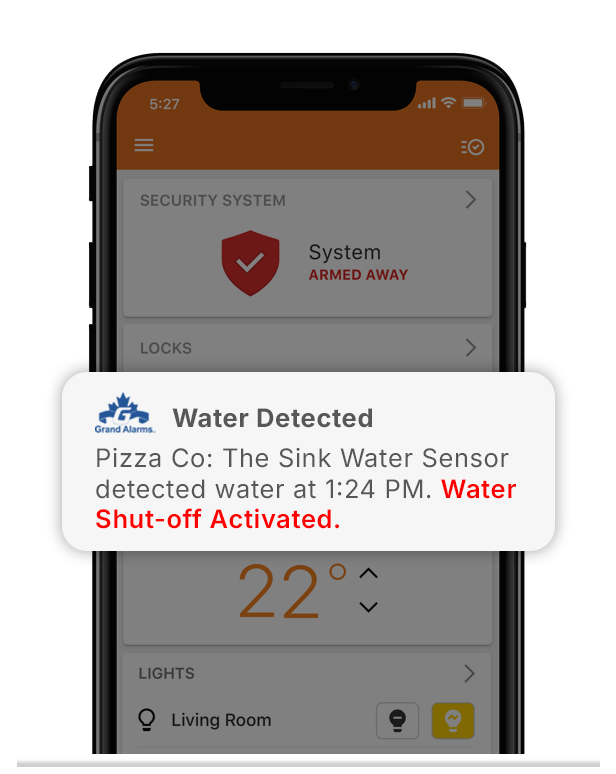
When the sensor detects water, it reports the event to your system and sends instant alerts through the Grand Alarms Smart Home App. That means you can respond quickly whether you are at home, at work, or away.
Get real-time alerts sent to your phone
Send notifications to more than one person in the home
See exactly what happened and when inside your app activity log
It Does More Than Spot the Leak.
It Can Help Stop the Water Too.
Getting an alert is good. Containing the damage is better. When paired with a compatible Smart Water Shut-off Valve, the Smart Water Sensor can help trigger automatic water shut-off so your home can respond before a leak spreads further.
Step 1:
The probe detects water where it should not be
Step 2:
An alert is sent right away through the app
Step 3:
A compatible shut-off valve closes the main water line
Put the Probe Where Leaks Start First
Not Where You Notice Them Too Late
The Smart Water Sensor is ideal for home leak zones where the water source is low, tucked away, or awkward to monitor directly. The remote probe gives you more flexibility than a standard flat sensor.
Top business placements:
✔ Under kitchen sinks
✔ Under bathroom sinks
✔ Near water heaters
✔ Behind washing machines
✔ Near dishwashers
✔ Near refrigerators with water lines
✔ In utility rooms
✔ In basement corners and low points
✔ Near sump pump areas
Reliable Wireless Protection
That Fits Real Homes
A leak sensor only helps if it stays connected and keeps reporting properly. The Smart Water Sensor is built for reliable wireless communication, long battery life, and supervised monitoring so your system knows the device is online and working.
Features:
• Strong wireless performance
• Supervised sensor reporting
• Low-battery alerts for easier maintenance
Smart Water Sensor or Smart Water Tile?
Here’s the Simple Difference.
Both help detect leaks early, but they are built for different placements.
Smart Water Sensor
✔ Best when the sensing point needs to go low and the transmitter should stay higher
✔ Great for under-sink plumbing, sump areas, and utility spaces
Smart Water Tile
✔ Best for very low-clearance flat placements
✔ Great under appliances and in tight corners
Built for Low-Maintenance Leak Protection
The Smart Water Sensor is designed to be compact, reliable, and easy to live with once installed.
Specifications
• Battery: long-life battery operation with low-battery reporting
• Probe: wired remote water probe for targeted detection
• Wireless: supervised communication with your system
Why Homeowners Want Probe-Based Leak Detection in the Right Places
“We installed one under the sink and another near the water heater. The alerts gave us peace of mind because those are exactly the areas we never think to check.”
Melissa R. – Vaughan, Ontario
“The probe design made more sense for our utility room setup. It let us place detection right where water would collect first.”
David T. – Oakville, Ontario
Common Questions About the Smart Water Sensor for Homes
Q: What does the Smart Water Sensor do?
Q: How is this different from the Smart Water Tile?
Q: Will I get alerts in the Grand Alarms Smart Home App?
Q: Can it shut off the water automatically?
Q: Where should I install it?
Common residential placements include under sinks, near water heaters, behind
appliances, in utility rooms, and near basement low points or sump areas.
Q: Why would I choose a probe sensor instead of a flat tile sensor?
Q: Does it report low battery?
Protect Your Home
From Hidden Leaks Before They Become Costly Repairs
Catch Hidden Leaks
Early Before They Turn Into Major Home Damage
Smart Water Sensor for Homes
Home » Residential » Residential Smart Water Devices » Residential Smart Water Sensor
Most Water Damage Starts Quietly
Then Gets Expensive Fast
Leaks usually do not announce themselves. They drip behind appliances, under sinks,
around water heaters, or into basement corners until the damage spreads into flooring,
drywall, cabinets, and insulation. Early detection matters because water damage gets
worse while nobody is looking.
Hidden Leaks
Water often shows up in places you do not check every day
Repairs Add Up Fast
A small leak can lead to a much larger cleanup and restoration job
Damage Rarely Stays Put
One leak can spread into nearby rooms, walls, or finished spaces
A Smarter Sensor
for Tight Spaces and Hard-to-Reach Leak Zones
The Smart Water Sensor uses a remote water probe on a cable. That means the sensing point can sit low where water collects first, while the main transmitter mounts higher where it stays dry and communicates reliably with your system.
Features
• Probe-based detection right where water appears first
• Main sensor mounts higher for better placement and protection
• Long battery life with low-battery reporting
The Moment Water Is Detected
You Know About It
Instant Notifications
Get real-time alerts sent to your phone
Shared Household Alerts
Event History
It Does More Than Spot the Leak.
It Can Help Stop the Water Too.
Step 1:
The probe detects water where it should not be
Step 2:
Step 3:
Put the Probe Where Leaks Start First
Not Where You Notice Them Too Late
Reliable Wireless Protection
That Fits Real Homes
A leak sensor only helps if it stays connected and keeps reporting properly. The Smart Water Sensor is built for reliable wireless communication, long battery life, and supervised monitoring so your system knows the device is online and working.
Features:
• Strong wireless performance
• Supervised sensor reporting
• Low-battery alerts for easier maintenance
Smart Water Sensor
or Smart Water Tile?
Here’s the Simple Difference.
Both help detect leaks early, but they are built for different placements.
Smart Water Sensor
✔ Best when the sensing point needs to go low and the transmitter should stay higher
✔ Great for under-sink plumbing, sump areas, and utility spaces
Smart Water Tile
✔ Best for very low-clearance flat placements
✔ Great under appliances and in tight corners
Built for Low-Maintenance Leak Protection
The Smart Water Sensor is designed to be compact, reliable, and easy to live with once installed.
Specifications
• Battery: long-life battery operation with low-battery reporting
• Probe: wired remote water probe for targeted detection
• Wireless: supervised communication with your system
Why Homeowners Want Probe-Based
Leak Detection in the Right Places
“We installed one under the sink and another near the water heater. The alerts gave us peace of mind because those are exactly the areas we never think to check.”
Melissa R. – Vaughan, Ontario
“The probe design made more sense for our utility room setup. It let us place detection right where water would collect first.”
David T. – Oakville, Ontario
Common Questions About the Smart Water Sensor for Homes
Q: What does the Smart Water Sensor do?
Q: How is this different from the Smart Water Tile?
Q: Will I get alerts in the Grand Alarms Smart Home App?
Q: Where should I install it?
Q: Why would I choose a probe sensor instead of a flat tile sensor?
Q: Does it report low battery?
Protect Your Home